Why Strong HOA Boards Matter in Huntersville, NC
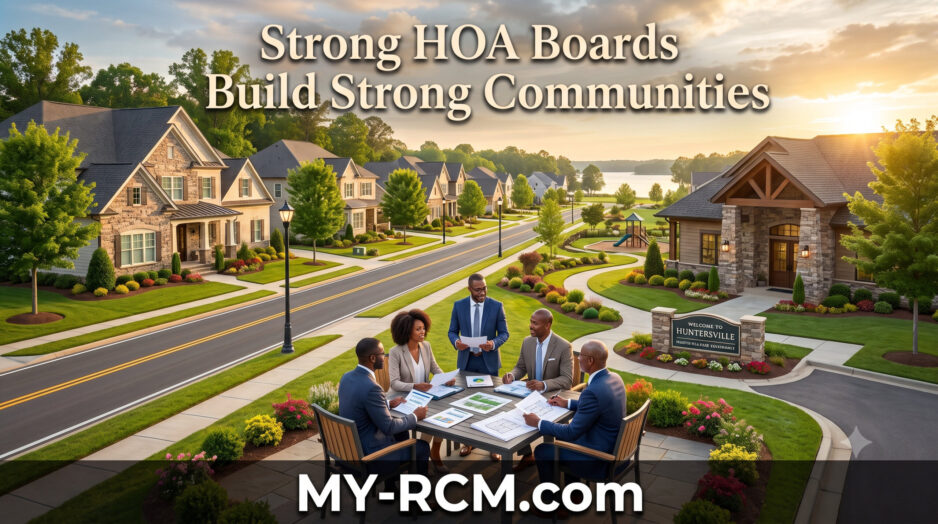
Why Strong HOA Boards Matter in Huntersville, North Carolina
Every successful homeowners association has one thing in common—a dedicated HOA board that focuses on protecting homeowners, preserving community standards, and planning for the future.
Whether your neighborhood is a long-established community near Lake Norman, a self-managed HOA looking for additional support, or a newly developed subdivision preparing for turnover from the builder, strong leadership is one of the most important factors in maintaining property values and homeowner satisfaction.
Huntersville continues to be one of North Carolina’s fastest-growing communities. With its proximity to Charlotte, beautiful neighborhoods, excellent schools, and access to Lake Norman, buyers expect well-maintained communities with responsible HOA leadership.
Unfortunately, many HOA boards struggle with increasing maintenance costs, homeowner communication, reserve funding, and finding enough volunteer leaders willing to serve.
The good news is that every HOA can improve.
This guide explains why effective HOA boards are essential, shares practical HOA financial management tips, explores HOA transparency best practices, and offers actionable HOA board management tips that every community can implement.
Why HOA Boards Are More Important Than Ever
An HOA board is far more than a group of volunteers enforcing community rules.
Board members are responsible for protecting one of the largest investments homeowners will ever make—their homes.
Effective boards help ensure that neighborhoods remain financially healthy, visually attractive, legally compliant, and enjoyable places to live.
In growing communities like Huntersville, where new developments continue to expand toward Lake Norman and the Charlotte metropolitan area, proactive HOA leadership becomes even more important.
The Primary Responsibilities of an HOA Board
- Protect homeowner investments
- Maintain common areas
- Prepare annual operating budgets
- Fund reserve accounts
- Enforce governing documents fairly
- Hire and oversee vendors
- Communicate with homeowners
- Plan for future capital improvements
- Ensure compliance with North Carolina laws
When these responsibilities are managed consistently, communities remain attractive to current homeowners and prospective buyers.
Learn more about our professional HOA management services and how we help North Carolina communities operate more efficiently.
How Strong HOA Leadership Protects Property Values
One of the biggest misconceptions about homeowners associations is that they exist simply to enforce rules.
In reality, their greatest purpose is protecting property values.
Communities with organized leadership often experience:
- Better maintained entrances
- Healthier landscaping
- Higher buyer demand
- Lower deferred maintenance costs
- Fewer homeowner disputes
- Better amenities
- Greater neighborhood pride
Real estate professionals regularly note that buyers evaluate an HOA before making an offer. Well-maintained neighborhoods often command stronger resale values because buyers have confidence that community standards will be preserved.
This is particularly true throughout Huntersville where neighborhoods compete with nearby communities in Cornelius, Davidson, Denver, and Mooresville.
Transparency Builds Trust
If there is one issue that creates frustration faster than anything else, it is poor communication.
Homeowners rarely object to reasonable decisions when they understand why those decisions were made.
They become frustrated when information is difficult to find, financial reports are unclear, or board meetings lack transparency.
HOA Transparency Best Practices
Successful HOA boards make communication a priority.
- Publish monthly financial summaries
- Distribute meeting agendas before meetings
- Post approved meeting minutes promptly
- Maintain updated governing documents online
- Provide project updates regularly
- Explain special assessments before votes occur
- Encourage homeowner participation
Transparency reduces rumors, increases homeowner confidence, and creates stronger community engagement.
According to the Community Associations Institute (CAI), effective communication is one of the key characteristics of successful community associations.
Financial Planning Is More Than Creating an Annual Budget
One of the most overlooked responsibilities of an HOA board is long-term financial planning.
Many communities focus almost entirely on balancing the current year’s budget while overlooking future infrastructure costs.
This often results in deferred maintenance, underfunded reserves, and unexpected special assessments.
HOA Financial Management Tips Every Board Should Follow
- Create multi-year financial forecasts.
- Conduct reserve studies regularly.
- Review vendor contracts every year.
- Build preventative maintenance schedules.
- Monitor inflation and utility increases.
- Compare contractor pricing regularly.
- Review insurance coverage annually.
For Huntersville communities, proactive planning is especially important because seasonal weather, humidity, and rapid neighborhood growth can accelerate maintenance costs.
Boards that invest in planning today often avoid costly financial emergencies tomorrow.
Why Self-Managed Communities Eventually Need Professional Support
Many neighborhoods begin as self-managed communities.
Volunteer leadership often works well during the early years, particularly in smaller neighborhoods.
However, as communities grow, responsibilities become increasingly complex.
Board members often find themselves managing:
- Accounting
- Vendor negotiations
- Collections
- Legal compliance
- Insurance renewals
- Architectural requests
- Maintenance coordination
- Homeowner disputes
Volunteer burnout becomes common.
This is often when communities begin searching for the Best HOA Management Company in North Carolina.
A professional management company allows board members to focus on leadership while experienced professionals handle day-to-day operations, financial reporting, homeowner communication, and vendor coordination.
Discover how Revelation Community Management partners with HOA boards throughout North Carolina to simplify community management while increasing transparency and protecting property values.
Preparing for a Successful Developer Transition
One of the most important milestones in any new community is the transition from developer control to homeowner leadership. A smooth transition lays the foundation for years of financial stability, while a poorly managed turnover can leave an HOA with unexpected expenses, incomplete records, or unresolved maintenance issues.
For new developments throughout Huntersville, careful planning during this phase helps ensure the community begins on solid financial and operational footing.
Developer Transition Checklist
- Review all governing documents and amendments.
- Obtain complete financial records.
- Commission a reserve study.
- Inspect common areas with qualified professionals.
- Review all vendor contracts.
- Verify warranties for community assets.
- Ensure adequate insurance coverage is in place.
- Create a homeowner communication plan before turnover.
Communities that complete these steps early are better positioned to avoid expensive surprises and establish trust between the new board and homeowners.
7 HOA Board Management Tips That Create Stronger Communities
Exceptional HOA boards are proactive rather than reactive. They focus on long-term planning, consistent communication, and responsible financial stewardship.
1. Think Five Years Ahead
Develop a strategic plan that anticipates future maintenance needs, amenity improvements, reserve funding, and capital projects instead of reacting to emergencies.
2. Make Communication Routine
Homeowners appreciate regular updates—even when there is little news. Monthly newsletters, email updates, and homeowner portals help eliminate confusion and build confidence.
3. Base Decisions on Data
Review reserve studies, maintenance reports, vendor performance, homeowner feedback, and financial statements before making major decisions.
4. Invest in Board Education
Understanding fiduciary responsibilities, North Carolina HOA laws, budgeting, and governance helps board members make informed decisions that benefit the entire community.
5. Review Vendor Performance Annually
Landscaping, pool maintenance, security, and maintenance contracts should be evaluated every year to ensure homeowners receive the best value.
6. Encourage Homeowner Participation
Committees, volunteer projects, surveys, and town hall meetings help create stronger engagement while reducing the workload placed on board members.
7. Partner with Experienced Professionals
Professional HOA managers provide expertise in accounting, compliance, vendor oversight, homeowner communication, and board support, allowing volunteers to focus on leadership rather than daily administration.
How to Improve an HOA Community Without Raising Dues
One of the biggest concerns for every HOA board is balancing community improvements with homeowner affordability.
Fortunately, meaningful improvements do not always require increasing assessments.
Cost-Effective Community Improvements
- Improve landscaping at entrances using seasonal plants.
- Upgrade community signage.
- Replace outdated lighting with energy-efficient LED fixtures.
- Create digital newsletters instead of printed mailers.
- Organize neighborhood clean-up days.
- Negotiate multi-year vendor agreements.
- Use preventive maintenance instead of emergency repairs.
- Install water-efficient irrigation systems.
These relatively small improvements can significantly enhance curb appeal while controlling long-term operating costs.
Technology Is Changing HOA Management
Today’s homeowners expect the same level of convenience from their HOA that they receive from banks, retailers, and utility providers.
Modern technology improves transparency while reducing administrative work for volunteers.
Technology Every HOA Should Consider
- Secure homeowner portals
- Online assessment payments
- Electronic architectural request submissions
- Digital document libraries
- Community maintenance request systems
- Email and text notification platforms
- Online board meeting registration
Communities that embrace technology often experience faster communication, fewer homeowner complaints, and greater operational efficiency.
Common Mistakes That Hurt Property Values
Even well-intentioned HOA boards can unintentionally reduce property values by delaying maintenance or failing to communicate effectively.
Avoid These Common HOA Mistakes
- Ignoring reserve funding.
- Delaying maintenance projects.
- Failing to communicate financial decisions.
- Applying rules inconsistently.
- Keeping outdated governing documents.
- Using the same vendors without performance reviews.
- Waiting until problems become emergencies.
Strong leadership means identifying problems before they become expensive.
Why Huntersville HOA Boards Choose Professional Management
Huntersville continues to attract homeowners seeking beautiful neighborhoods, quality amenities, and convenient access to Charlotte and Lake Norman. Meeting these expectations requires organized leadership and experienced operational support.
Communities that partner with a professional management company often experience:
- Improved homeowner communication
- Professional financial reporting
- Better vendor oversight
- Reduced board workload
- Improved compliance with governing documents
- Long-term reserve planning
- Better homeowner satisfaction
If your board has been searching for the Best HOA Management Company in North Carolina, consider choosing a partner that values transparency, accountability, responsiveness, and long-term community success.
Learn more about our HOA Management Services, our experienced team, or request a consultation to discuss your community’s goals.
Frequently Asked Questions
What does an HOA board actually do?
An HOA board oversees the financial, operational, and administrative responsibilities of the homeowners association. This includes budgeting, reserve planning, vendor management, maintaining common areas, enforcing governing documents, and communicating with homeowners.
How can an HOA improve transparency?
Transparency improves when boards provide regular financial reports, publish meeting agendas and minutes, communicate project updates, explain major decisions, and make governing documents easily accessible.
Can a professional HOA management company save money?
Yes. Experienced management companies often reduce long-term expenses through competitive vendor bidding, preventive maintenance planning, stronger financial oversight, and improved contract management.
Why are reserve funds important?
Reserve funds prepare communities for major future expenses such as roofing, paving, pools, clubhouses, and infrastructure repairs without relying on unexpected special assessments.
How often should an HOA review its budget?
Boards should review financial statements monthly, update budgets annually, and regularly evaluate reserve funding to ensure long-term financial stability.
Building Strong Communities Starts with Strong Leadership
A successful HOA is built on transparency, sound financial planning, proactive maintenance, and consistent communication. Whether your community is self-managed, transitioning from a developer, or considering a new management partner, investing in strong leadership today helps protect homeowners’ investments for years to come.
At Revelation Community Management, we proudly support HOA boards throughout Huntersville and the greater Charlotte region with professional guidance, responsive communication, and customized management solutions designed to strengthen communities and protect property values.