HOA Reserve Study Management | Carolina Board Guide
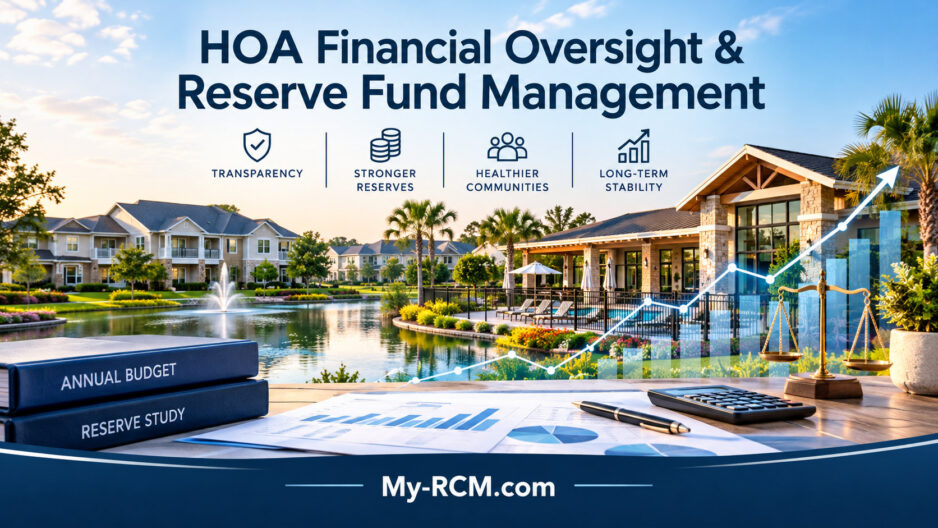
Carolina HOA Financial Oversight & Reserve Fund Management: Protecting Community Solvency
Executing a proactive HOA reserve study management strategy enables community association boards across York County, South Carolina, and the greater Charlotte metropolitan area to safeguard common property assets and maintain long-term fiscal stability. With rising capital replacement costs for roofs, asphalt paving, retention ponds, and recreational amenities across Rock Hill, Fort Mill, Lake Wylie, Clover, and Mecklenburg County, volunteer directors must balance operating expenses with adequate reserve contributions. Establishing structured HOA financial oversight eliminates unexpected deficit spending, achieves special assessment prevention, and fulfills fiduciary duties under both North Carolina and South Carolina statutes.
Effective fiscal management requires a multi-tiered framework: conducting accredited professional reserve studies, maintaining transparent accounting records, enforcing timely assessment collections, and performing routine financial health audits. This guide provides board officers and treasurers with actionable methodologies to manage reserve allocations, navigate statutory disclosure rules, and secure community property values.
Phase 1: Reserve Studies and Statutory Carolina Requirements
Underfunding reserve accounts is the single greatest financial risk facing suburban and master-planned communities across the Carolinas. A reserve study is an in-depth financial planning tool that evaluates the current condition of common elements, estimates their remaining useful life, and creates a 20- to 30-year funding schedule to cover major repairs.
According to national governance benchmarks established by the Community Associations Institute (CAI), associations should update their reserve study every three to five years, with annual financial reviews conducted by the board during budget preparation. Furthermore, under the South Carolina Homeowners Association Act (S.C. Code Ann. § 27-30-110 et seq.) and North Carolina Planned Community Act provisions (N.C.G.S. § 47F), directors operate under strict fiduciary obligations to maintain accurate financial disclosures and accounting records for all lot owners.
Essential Elements of a Comprehensive Reserve Study
- Component Inventory: A complete physical accounting of all shared assets, including private roads, entrance gates, clubhouse roofs, pool shells, stormwater retention basins, and perimeter fencing.
- Useful Life & Remaining Useful Life (RUL): Expert evaluation projecting when each physical component will require major restoration or full replacement.
- Current Replacement Cost: Localized cost estimates reflecting current regional labor and material prices across York and Mecklenburg counties.
- Percent Funded Standard: Comparing existing cash reserves against target benchmark levels to measure community financial health.
Phase 2: Achieving Special Assessment Prevention
Levying an unexpected special assessment is often the result of deferred maintenance or static annual reserve contributions. When major infrastructure—such as stormwater pond erosion or clubhouse HVAC systems—fails without dedicated reserve capital, boards are forced to demand sudden, lump-sum payments from homeowners, triggering intense neighborhood backlash and collection delinquencies.
To achieve consistent special assessment prevention, boards should transition from reactive budgeting to incremental, planned assessment adjustments. Indexing annual reserve contributions to reflect actual regional inflation prevents dramatic deficit gaps while keeping monthly or annual dues predictable.
Managing Inflation and Vendor Price Shifts
Labor and civil engineering costs across the Charlotte and Rock Hill markets have fluctuated significantly. Boards must ensure that reserve funding calculations reflect current vendor pricing rather than legacy projections drafted years prior. Conducting periodic competitive Request for Proposal (RFP) bidding for major capital projects ensures market-competitive pricing without compromising quality.
Phase 3: Fiduciary Accounting Controls and Financial Reporting
Maintaining rigorous HOA financial oversight requires strict internal control procedures to protect association capital from commingling, accounting errors, or fraud.
Key Fiduciary Controls Every Board Should Implement
- Separation of Funds: Operating funds used for daily maintenance must strictly remain in separate, fully insured bank accounts from long-term capital reserve funds.
- Dual Signature Authorization: Requiring two authorized board signatures or dual digital approval for any reserve account transfers or high-value disbursements.
- Monthly Balance Sheet Reconciliations: Reviewing monthly bank statements, general ledgers, and accounts receivable reports to identify collection lags early.
- Frequent Financial Health Checks: Partnering with professional management teams that provide clear monthly reporting keeps board members fully informed of balance sheet trends.
Phase 4: Digital Homeowner Portals and Assessment Collections
A reserve funding model is only as effective as the association’s assessment collection rate. High delinquency rates drain operating cash flows, forcing boards to siphon funds away from capital reserves just to cover daily utility and vendor invoices.
Deploying a modern user-friendly homeowner portal allows residents to set up automated eCheck or credit card payments, view account ledger transaction histories, and receive digital statement reminders. Streamlining payment workflows reduces delinquency rates below 5%, ensuring steady cash flows into reserve accounts year-round.
The Board’s Financial Oversight & Reserve Checklist
Use this chronological checklist to evaluate your association’s financial health and reserve readiness:
1. Reserve Readiness & Study Audit
- Verify that a professional reserve study has been performed or updated within the last three to five years.
- Audit the current reserve account balance against recommended percent-funded benchmarks.
- Inspect major physical assets (roofing, paving, retention basins) alongside qualified vendors during annual walkthroughs.
2. Accounting & Internal Controls
- Confirm operating accounts and reserve funds are held in separate, fully insured financial institutions.
- Enforce dual authorization procedures for all capital reserve transfers and check sign-offs.
- Review monthly bank reconciliations, income statements, and delinquency ledgers promptly.
3. Budget Integration & Transparency
- Incorporate mandatory annual reserve line items directly into the proposed annual operating budget.
- Distribute clear budget summaries and reserve disclosure statements to all homeowners within statutory notice windows.
- Provide residents with access to digital payment portals to minimize assessment collection friction.
Strengthen Your Association’s Solvency with Revelation Community Management
Balancing complex reserve funding models, managing assessment collections, and keeping financial records fully compliant demands significant expertise and administrative dedication. Volunteer directors should not have to navigate reserve planning, vendor procurement, and financial reporting alone.
By leveraging dedicated tailored HOA management services, Carolina boards access Certified Property Managers (CMCA, AMS), meticulous financial health checks, and a proven community management model backed by a One Business Day Communication Guarantee. Professional financial guidance keeps your association solvent, protects volunteer board leaders, and secures home values for the future.
Ready to evaluate your association’s reserve fund health or upgrade your community’s financial management? Connect with the experienced team at Revelation Community Management today.
Disclaimer: This article is provided for general educational purposes only and does not constitute legal, financial, or accounting advice. HOA statutes, state laws, and financial requirements are subject to change, and each association’s obligations depend on its specific governing documents and circumstances. Boards should consult qualified legal counsel, a CPA, or a professional management team regarding specific compliance and financial matters.
Leave a Comment