
Carolina HOA Winterization Guide | Asset Protection
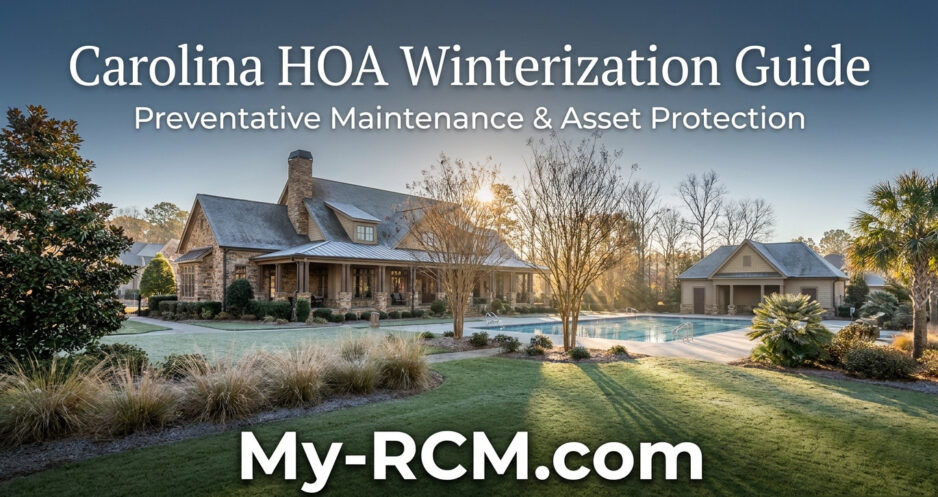
Carolina HOA Winterization & Preventative Maintenance: Protecting Community Assets and Capital Reserves
Executing a proactive carolina hoa winterization guide is essential for community association directors across York County, South Carolina, and the greater Charlotte metropolitan area as sub-freezing temperatures arrive. From Rock Hill, Fort Mill, Lake Wylie, and Clover to Mecklenburg and Union counties, Piedmont winters bring sharp freeze-thaw cycles that can devastate unprotected association infrastructure. Implementing disciplined hoa preventative maintenance and thorough common element winterization protects shared neighborhood assets—including irrigation backflow preventers, clubhouse plumbing, pool cabana facilities, stormwater retention basins, and private asphalt roadways—from catastrophic freeze damage and unexpected budget drain.
When volunteer boards delay seasonal winterization, associations risk burst commercial pipes, flooded amenity centers, compromised stormwater drainage, and emergency insurance claims carrying substantial deductibles. Establishing a standardized preventative maintenance protocol ensures board directors fulfill their legal fiduciary duties, avoid emergency special assessments, and safeguard long-term property values across North and South Carolina communities.
Phase 1: Statutory Fiduciary Duty and Maintenance Authority
Volunteer board members hold a binding statutory obligation to maintain, repair, and replace common elements outlined in their recorded governing documents. Failing to implement reasonable preventative measures before winter weather arrives can jeopardize insurance coverage and expose the association to negligence claims.
Under the North Carolina Planned Community Act (N.C.G.S. § 47F-3-107) and the South Carolina Homeowners Association Act (S.C. Code Ann. § 27-30-110 et seq.), boards are legally tasked with administering and preserving common property. According to commercial risk management data from the Community Associations Institute (CAI), associations that carry out scheduled semi-annual preventative maintenance checklists reduce unexpected capital repair costs by up to 35% compared to communities operating on a reactive repair model.
Core Legal and Operational Winterization Objectives
- Preserving Association Insurability: Ensuring common element buildings meet property insurance freeze-protection warranties, preventing claim denials resulting from unheated facilities.
- Protecting Reserve Balances: Avoiding unbudgeted operating cash drains that siphon away dedicated capital reserve contributions.
- Vendor Service Contract Verification: Confirming winter weather response times, snow/ice remediation terms, and emergency contact procedures with contracted landscape and maintenance partners.
- Documented Inspection Logs: Archiving date-stamped preventative maintenance logs to demonstrate prudent board fiduciary oversight.
Phase 2: Amenity Center and Plumbing Infrastructure Shutdown
Water intrusion from frozen, ruptured pipes is the single costliest cold-weather hazard for community associations. Unheated pool cabanas, outdoor restrooms, pool pump houses, and commercial irrigation systems require meticulous shutdown protocols well before the first hard freeze.
Commercial irrigation systems must be fully depressurized and purged using high-volume compressed air rather than simple gravity draining. Backflow preventers—often situated in above-ground exterior enclosures—must be drained, insulated, and secured. Inside community clubhouses and fitness centers, thermostats should be locked at a minimum of 55°F to protect interior fire sprinkler lines and domestic plumbing fixtures from freezing during prolonged cold snaps.
Phase 3: Stormwater Basins, Drainage, and Asphalt Preservation
Winter rainfall combined with freezing temperatures creates unique structural hazards for horizontal infrastructure. Water expanding inside micro-fissures in private asphalt roads and parking lots quickly accelerates pothole formation and structural sub-base erosion.
Key Exterior Asset Inspection Protocols
- Stormwater Ponds and Riser Structures: Clearing fallen leaves, autumn sediment, and brush from retention basin outfall grates to prevent winter flooding and iced-over roadways.
- Gutter and Downspout Clearing: Removing organic debris from clubhouse rooflines to prevent ice damming and foundation soil saturation.
- Asphalt Crack Sealing: Sealing pavement fractures wider than a quarter-inch before freezing precipitation forces water beneath the driving surface.
- Tree Canopy Safety Audits: Trimming deadwood and overhanging limbs adjacent to sidewalks, power lines, and community structures before winter ice loads cause catastrophic limb drops.
Phase 4: Digital Resident Communication and Winter Readiness
Community winterization requires active partnership between the board, management, and homeowners. Educating residents on their individual winterization responsibilities—such as disconnecting garden hoses from exterior spigots and keeping garage doors closed during freezing winds—protects adjoining property units in townhome and condominium settings.
Using a centralized user-friendly homeowner portal enables boards to broadcast urgent freeze warnings, publish holiday clubhouse schedules, and distribute inclement weather protocols instantly via email and push notifications. Portals also provide residents with an immediate digital channel to report fallen branches, icy sidewalk hazards, or common element water leaks in real time.
The Board’s Winterization & Asset Protection Checklist
Use this chronological checklist to guide your association through complete cold-weather preparation:
1\. Irrigation & Water Systems (Complete by Mid-November)
- Execute commercial blowout of all community irrigation lines, valves, and zone manifolds.
- Drain, insulate, and lock all exterior backflow prevention assemblies.
- Winterize outdoor hose bibbs, drinking fountains, and dog wash stations.
- Perform final chemical balancing and equipment shutdown on community swimming pools and water features.
2\. Clubhouse & Structural Enclosures (Complete by Early December)
- Verify clubhouse thermostats are locked at 55°F minimum and test backup emergency generator systems.
- Inspect attic spaces, fire riser rooms, and mechanical closets for adequate insulation.
- Service HVAC heating units, replace commercial air filters, and inspect chimney flues.
- Clean all exterior gutters, downspouts, and perimeter French drain networks.
3\. Vendor & Risk Management Coordination
- Confirm snow and ice remediation contracts, clarifying trigger depths, priority service lanes, and de-icing chemical types.
- Verify that vendor certificates of insurance (COIs) and workers’ compensation policies are active and on file.
- Ensure association emergency contact rosters are updated and distributed to all board members.
Leave a Comment