
HOA Vendor Contract Negotiation Guide | Carolina Boards
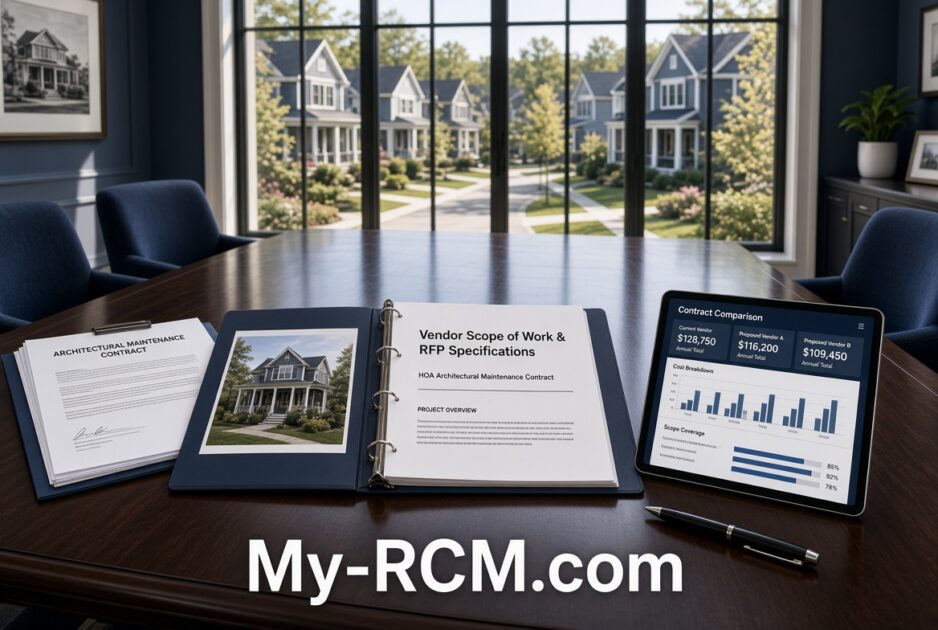
Carolina HOA Vendor Contract Negotiation Guide: Auditing Scopes and Locking In 2027 Rates
Executing an intentional hoa vendor contract negotiation strategy enables community association boards across York County, South Carolina, and the greater Charlotte metropolitan area to control escalating operational expenses before line items are locked into annual budgets. With inflation impacting labor, equipment, and materials across Rock Hill, Fort Mill, Lake Wylie, Clover, and Mecklenburg County, volunteer directors cannot afford to let commercial maintenance agreements renew on autopilot. Mastering vendor procurement protects neighborhood physical assets, eliminates unexpected deficit spending, and ensures compliance with board fiduciary duties under both North Carolina and South Carolina statutes.
Effective procurement requires a structured framework: auditing historical vendor deliverables, issuing standardized Requests for Proposals (RFPs), enforcing vendor insurance verification, and ensuring transparent board approvals. This comprehensive guide provides volunteer treasurers and trustees with actionable methodologies to benchmark service scopes, negotiate competitive contract terms, and secure measurable performance guarantees ahead of statutory budget ratification deadlines.
Phase 1: The Scope of Work Audit and the Evergreen Trap
The single greatest driver of vendor cost overruns during budget planning is the automatic contract rollover, commonly governed by evergreen renewal clauses. Many legacy contracts contain language stating that agreements renew automatically for 12-month terms unless written notice of cancellation is delivered 60 to 90 days before the contract anniversary date.
Waiting until late November to evaluate landscaping or pool service agreements frequently locks an association into another year of rate increases with no room for renegotiation. Board leaders must review all active service agreements by early October to identify renewal notification windows and verify cancellation terms.
Separating Baseline Maintenance from Variable Add-Ons
Landscape maintenance is typically the largest recurring operational line item in any suburban community budget across Fort Mill, Rock Hill, Lake Wylie, or Weddington. Boards mastering how to rebid hoa landscaping contracts must scrutinize current invoices to differentiate base contract work from variable supplemental charges:
- Base Contract Scope: Frequency of weekly turf mowing, edging, routine weed abatement, seasonal shrub pruning, and fall leaf cleanup.
- Discretionary Add-Ons: Annual mulch or pine straw installation, turf aeration, overseeding, seasonal color rotation, and tree canopy trimming above eight feet.
- Time-and-Materials Work: Irrigation component repairs, backflow testing, storm debris cleanup, and retention pond shoreline stabilization.
When service definitions are blurred, boards frequently pay premium hourly emergency rates for routine maintenance that should have been included in the base contractual scope.
Phase 2: Standardizing the HOA Vendor RFP Process
To negotiate effectively, boards must eliminate guesswork by issuing a standardized Request for Proposal (RFP) to at least three qualified service providers. Requesting generic contractor quotes without a detailed scope of work produces incompatible proposals that cannot be compared accurately.
According to community association governance standards outlined by the Community Associations Institute (CAI), professional procurement requires all bidding contractors to submit prices based on identical specifications, visit schedules, and service expectations.
Essential Specifications for Your RFP Package
Every commercial maintenance solicitation should include the following core components:
- Precise Property Boundaries: Clear GIS property boundary maps detailing common elements, turf acreage, detention basins, walking paths, and gate entrances.
- Service Schedules & Frequency: Explicit expectations for site visits (e.g., 36 mowing visits annually, monthly irrigation inspections, weekly pool chemical testing).
- Mandatory Insurance Thresholds: Proof of commercial general liability coverage (minimum $1,000,000 to $2,000,000), workers’ compensation insurance, and commercial auto liability.
- References & Equipment Verification: A minimum of three active HOA references of similar scale in the local county, plus proof of sufficient commercial equipment to service the property reliably.
Phase 3: Contract Terms, Risk Mitigation, and Fiduciary Compliance
Signing a vendor’s standard, one-sided preprinted proposal exposes the community to unnecessary operational risk. When finalizing agreements, boards must negotiate critical protective provisions directly into the master agreement.
Performance Standards and Cure Periods
Incorporate measurable performance thresholds and a clear cure-period mechanism. A balanced agreement should state that if a contractor fails to fulfill defined contractual duties, the board can issue written notice detailing the deficiency. If the contractor fails to cure the deficiency within 14 business days, the association should hold the contractual right to terminate the agreement without penalty.
Termination Without Cause
Ensure every service agreement contains a mutual “termination without cause” clause permitting either party to end the contract upon delivering 30 or 60 days of advance written notice. This ensures your board is not trapped in a multi-year arrangement with an underperforming vendor who technically avoids breaching legal terms but consistently fails community expectations.
Statutory Compliance and Conflict-of-Interest Disclosures
Under both the South Carolina Homeowners Association Act (S.C. Code Ann. § 27-30-110 et seq.) and North Carolina Planned Community governance laws, directors operate under strict fiduciary standards. Boards must maintain open procurement processes and disclose any personal, professional, or financial affiliations a board member holds with a bidding contractor. Documenting competitive proposals in official board minutes protects directors from liability while demonstrating diligence to homeowners.
Phase 4: Ongoing HOA Vendor Management
Negotiation does not end once the contract is executed; maintaining financial control requires continuous hoa vendor management and oversight throughout the fiscal year.
Establish a documented inspection workflow before invoices are approved and disbursed. Dedicated property managers or designated committee members should perform scheduled site walks to verify that contract milestones were satisfied. Never allow automated invoice processing without verifying that the billed tasks—such as seasonal turf chemical applications or retention pond weed control—were fully completed.
Partnering with professional management teams that execute a disciplined community management model provides boards with independent vendor oversight, routine work order tracking, and rigorous invoice auditing.
The Board’s Vendor Re-Bidding and Negotiation Checklist
Use this functional checklist to keep your vendor evaluations organized ahead of annual budget ratification:
1. Contract Review & Timeline Audit
- Review all active service contracts for auto-renewal clauses, cancellation deadlines, and price escalator formulas.
- Audit trailing 12-month billing statements to identify extra-work charges beyond base agreement fees.
- Survey board members and community stakeholders regarding current service satisfaction and recurring issues.
2. RFP Preparation & Competitive Bidding
- Draft standardized scopes of work outlining site acreage, service frequencies, and detailed task requirements.
- Distribute the RFP package to a minimum of three licensed, bonded, and insured contractors.
- Conduct mandatory on-site pre-bid walkthroughs with each prospective vendor to review common area boundaries.
3. Proposal Evaluation & Risk Assessment
- Build a side-by-side comparison matrix evaluating base pricing, emergency rates, and optional service costs.
- Verify that valid Certificates of Insurance (COI) naming the HOA as additional insured are submitted with bids.
- Contact client references from neighboring communities across York, Mecklenburg, or Union counties.
4. Contract Execution & Board Ratification
- Insert mandatory protective clauses: 30-day termination without cause and a 14-day performance cure window.
- Record the formal procurement discussion and contract approval vote in official association meeting minutes.
- Upload countersigned contracts, insurance certificates, and W-9s into the association’s central digital portal.
Strengthening Operational Value with Revelation Community Management
Conducting comprehensive contract re-bidding while balancing annual balance sheets requires extensive administrative effort and regional market insight. Volunteer directors should not have to navigate contractor procurement, insurance reviews, and contentious contract renewals alone.
By leveraging dedicated tailored HOA management services, boards access vetted regional contractor networks, structured RFP procedures, and proactive financial health checks. Professional administrative support keeps your association compliant, optimizes operational dollars, and safeguards community property values year after year.
Ready to benchmark your current vendor contracts or prepare a balanced operating budget for the upcoming fiscal year? Connect with the experienced team at Revelation Community Management today.
Disclaimer:
This article is intended for general educational purposes and is not legal advice. HOA laws and legislative requirements can change, and each association’s obligations depend on its governing documents and circumstances. Boards should consult qualified legal counsel regarding specific compliance questions.
Leave a Comment